One control plane for data, AI, and model operations.
Unify model lifecycle, data engineering, inference, and governance in one place. Multi-cloud, auditable, and secure by default.
Built for organizations that need velocity and control.
Inwire Platform is a full-stack enterprise AI platform that unifies model operations, data engineering, inference optimization, and governance under a single pane of glass. Built for organizations that refuse to compromise between velocity and control, it provides end-to-end visibility across the entire AI lifecycle, from data preparation and model training through deployment, monitoring, and continuous optimization. Every action is auditable. Every model is governed. Every deployment is secure by default.
The platform connects the operational surface that technical buyers care about: data preparation, model training, fine-tuning, deployment, inference optimization, observability, security, and cost control.
One platform from data to production.
Inwire connects the full AI stack into a single operating loop so teams can move faster without losing control, observability, or governance.
Prepare
Clean, label, version, and govern data for training, fine-tuning, evaluation, and RAG.
Train
Run reproducible training, fine-tuning, checkpoints, and experiments across GPU clusters.
Optimize
Choose inference engines, hardware profiles, quantization, and scaling policies with evidence.
Deploy
Ship models to cloud, region, managed provider, or on-prem Kubernetes with governed releases.
Observe
Watch latency, throughput, errors, utilization, cost, and reliability across every deployment.
Manage
Control teams, quotas, namespaces, secrets, lineage, approvals, and audit history.
A single layer that coordinates the entire AI stack.
Replace fragmented dashboards, deployment scripts, and one-off notebooks with a unified operating layer for teams, models, data, infrastructure, and cost.
The platform capabilities enterprises expect.
This is the original platform surface, redesigned with the new visual system and kept specific to how enterprise AI teams actually operate.
End-to-End Model Lifecycle Management
Register, version, deploy, monitor, and retire models from a single dashboard. Full lineage tracking from training data to production endpoint, with automated compliance audit trails.
Multi-Cloud, Multi-Cluster Deployment
Deploy to AWS, GCP, Azure, AliCloud, Nebius, or on-premise Kubernetes clusters from one interface. No vendor lock-in. Bring your own infrastructure or use inwire-managed environments.
Enterprise Security and Governance
Row-level security across all data, org-level tenant isolation with seven defense layers, Vault-backed secret management, and mandatory authentication on every API call. Built for SOC 2, HIPAA, and GDPR-ready environments.
Role-Based Access Control with Org and Team Hierarchy
Granular permissions at the organization, team, and individual level. API key management with hierarchical scoping. Every action is tied to an identity.
AI-Powered Deployment Intelligence
The built-in deployment wizard analyzes your model and recommends the optimal inference engine, GPU type, quantization strategy, and scaling policy, backed by real benchmark data, not guesswork.
Integrated Prompt Engineering and Cognitive Engineering
Build, test, version, and A/B test prompts with the Context and Cognitive Engineering (CCE) module. Includes token analytics, reflection scoring, and memory session management for stateful conversations.
GitOps-Native Workflow
Every deployment generates Kubernetes manifests that can be committed to Git, reviewed in PR, and applied via your existing CI/CD pipeline. Deployment-as-code is the default, not an afterthought.
Real-Time Observability Stack
Prometheus metrics, Grafana dashboards, Jaeger distributed tracing, and custom alerting rules built in. Monitor latency, throughput, error rates, GPU utilization, and cost per inference in real time.
29+ Provider Integrations
Native integrations with HuggingFace, OpenAI, Anthropic, DeepSeek, AWS SageMaker, Google Vertex AI, Nebius, AliCloud PAI, Docker registries, S3, GCS, Azure Blob, GitHub, and more. All credentials stored in Vault, never in browser storage.
Open Standards, No Lock-In
OpenAI-compatible inference API. Standard Kubernetes deployment primitives. Helm charts for every component. Export your models, configs, and data at any time.
The modules that power the Inwire Platform.
The platform is not a thin dashboard. It is a full operating layer for model operations, training, data, inference, RAG, evaluation, synthetic data, and agents.

Data Studio
Prepare high-quality datasets for training, evaluation, and RAG.
InferenceIQ
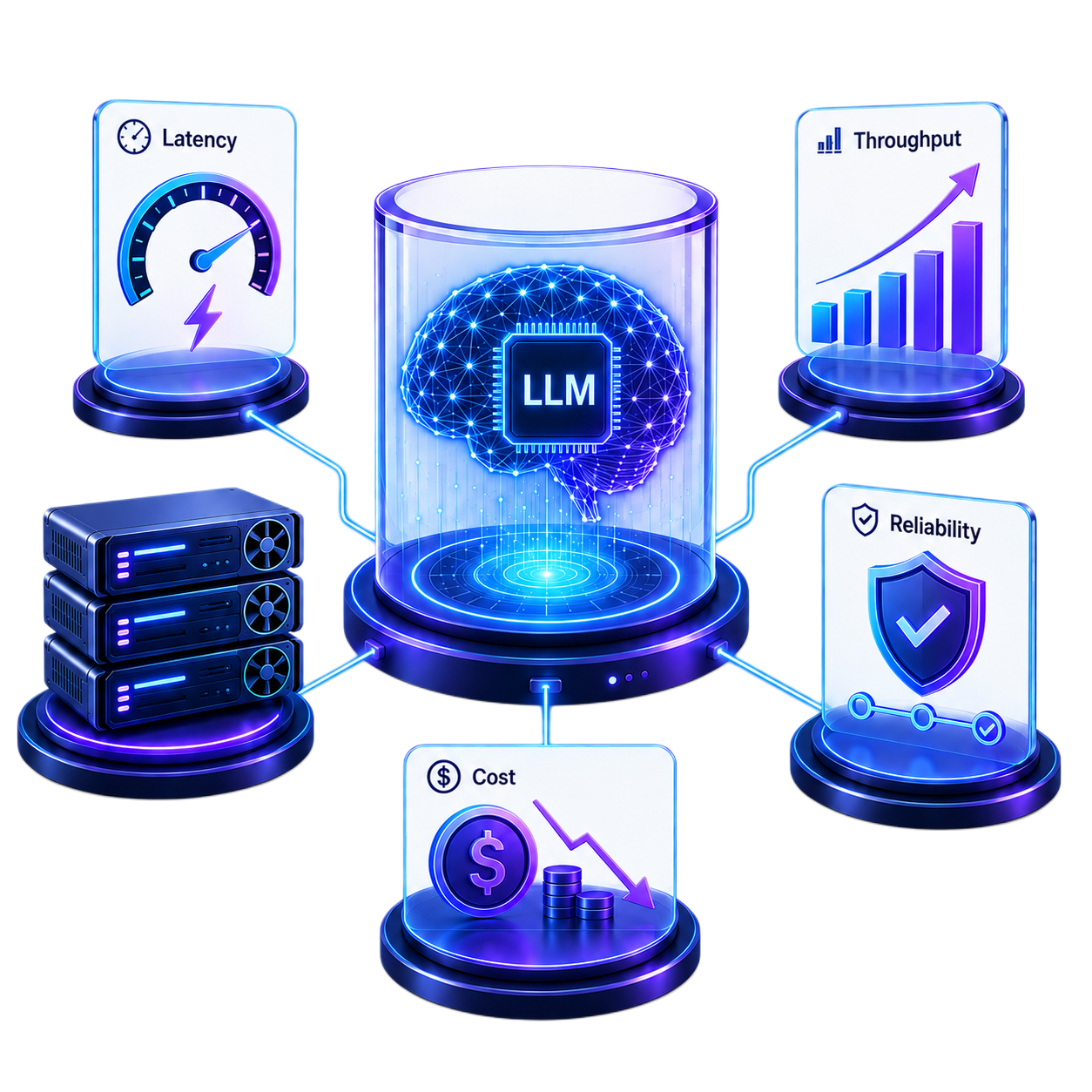
Optimize models and hardware before production traffic arrives.
Agentic RAG
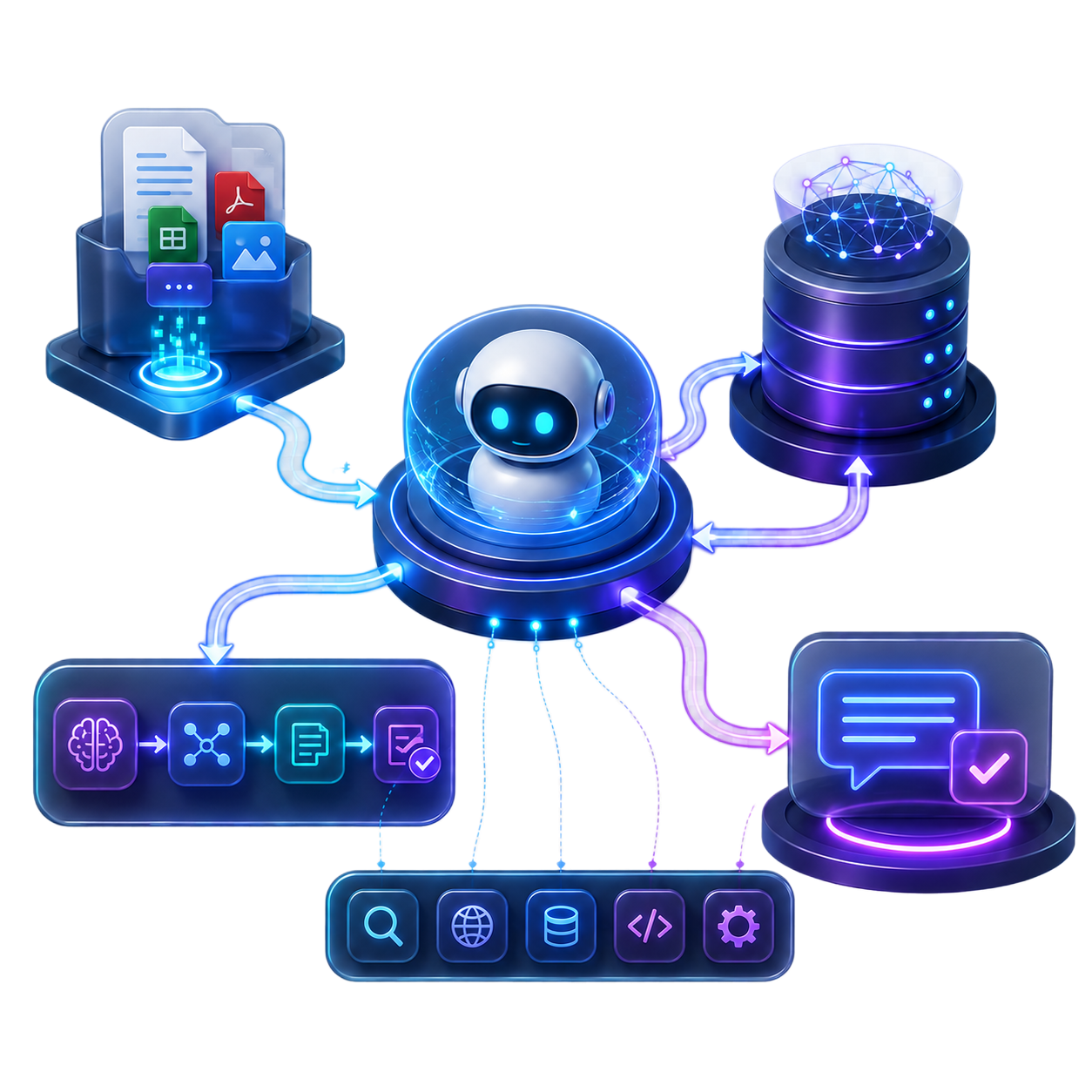
Connect data, retrieval, tools, models, and actions into pipelines.
The command center for your model fleet
Model Operations is the single place where every model in your organization is registered, versioned, deployed, watched, and retired. Pull artifacts from Hugging Face, GitHub, S3, or any registry, then walk through a guided deployment that handles resources, networking, secrets, and GitOps-ready manifests. Live metrics, scaling history, and full lineage connect what runs in production back to who shipped it, when, and why.
- One-click registration from Hugging Face, GitHub, S3, Docker Hub, and private registries
- Deployment wizard with AI-suggested configs (InferenceIQ-powered)
- Multi-cloud targets: AWS EKS, GKE, AKS, Alibaba ACK, Nebius, and on-prem Kubernetes
- Live dashboards: GPU use, latency, throughput, and error rates per deployment
- End-to-end lineage: deployer, timestamp, config snapshot, and rationale
- Auto-generated Kubernetes YAML & Helm, versioned like application code
Adapt foundation models to your domain
Fine-tuning turns general models into specialists. This module spans dataset prep through training config, experiment tracking, and evaluation, supporting parameter-efficient and full fine-tuning across the stacks your teams already use, with room to scale out on multi-GPU clusters.
- LoRA & QLoRA for memory-efficient LLM adaptation
- Full fine-tuning for smaller models and custom architectures
- Dataset browser with quality scoring, filters, and augmentation helpers
- Hyperparameter search with configurable strategies
- Experiment tracking: metrics, loss curves, checkpoints
- Distributed jobs across multi-GPU and multi-node clusters
Train at scale. Track everything.
Train from scratch or continue pre-training in a managed, reproducible environment. From single-GPU experiments to large distributed runs, every job is scheduled, versioned, and auditable, so science and compliance stay aligned.
- GPU-backed training jobs with fair scheduling and autoscaling hooks
- AutoML paths for architecture search and hyperparameter sweeps
- Live experiment view: loss, validation metrics, utilization
- Dataset versioning tied to Data Studio lineage
- Checkpoints with resume-on-failure
- PyTorch, TensorFlow, JAX, and custom training loops
Prepare, transform, and govern your AI data
Data Studio turns raw inputs into AI-ready datasets. Build pipelines that clean, label, and version data inside a governed perimeter, whether you are fueling training, eval sets, or RAG corpora, with traceability from source to model.
- Visual pipelines for ingest, transform, and export
- Dataset versioning with lineage to every downstream run
- Labeling workspaces, QA scoring, and reviewer workflows
- Schema checks and automated quality gates
- PII discovery and redaction for regulated workloads
- Structured, unstructured, and streaming sources
AI that optimizes your AI
InferenceIQ removes guesswork from inference. Point it at any model, from compact encoders to frontier LLMs, and get ranked, scored recommendations for engines, hardware, quantization, and cost, with plain-language rationale and confidence you can defend in a review.
- Architecture-aware analysis: parameters, attention, quantization fit
- Multi-objective scoring: latency, throughput, cost, reliability, sustainability
- Engine picks: vLLM, TGI, TensorRT-LLM, ONNX Runtime, Triton, llama.cpp
- GPU sizing across 13+ profiles and real cloud pricing
- Quantization guidance: FP16, FP8, INT8, INT4, AWQ, GPTQ, GGUF
- Quick Optimize: model link in, ranked options in seconds
From Hugging Face to production in minutes
Launch Pad is the fastest path from a public model card to a live endpoint. Browse, compare, wire credentials, and deploy, whether you need a one-click hosted route or a full Kubernetes path with InferenceIQ baked in.
- Hugging Face discovery with trends, downloads, and community signals
- Filters by task, architecture, and model size
- Side-by-side pricing across 29+ hosted inference providers
- One-click deploy to SageMaker, Nebius, Together, RunPod, and more
- Kubernetes path with optimization recommendations included
- Gated models: licenses and tokens handled securely
Retrieval that reasons, not just retrieves
Agentic RAG builds pipelines where agents decompose questions, pull from multiple sources, verify answers, and iterate until quality bars are met, backed by document processing, chunking, embeddings, and guardrails you can audit.
- Multi-source retrieval: docs, databases, APIs, knowledge bases
- Agentic flows: decomposition, self-check, iterative refinement
- Ingestion for PDFs, Office, HTML, Markdown, code, structured rows
- Chunking: overlap, semantic splits, recursive strategies
- Embedding lifecycle across providers
- RAG Sentinel: scoped access, PII handling, safety policies
Ship with confidence, not hope
Evaluation Hub makes quality gates explicit. Define criteria, run automated benchmarks, compare variants with statistics, and block promotion when metrics regress, across accuracy, safety, latency, and domain-specific rubrics.
- Custom frameworks with pass/fail thresholds you own
- Benchmark suites on every version before release
- Statistical comparisons across model variants
- Bias and fairness checks across cohorts
- Toxicity and policy tests with configurable rules
- Grounding tests for RAG and knowledge-heavy workloads
Generate data that doesn’t exist yet
Synthex produces high-quality synthetic data when real data is scarce, sensitive, or skewed. Shape distributions, stress-test robustness, scrub PII, and leave an audit trail, whether you need thousands of rows or millions.
- Generation for text, structured fields, and multimodal scenarios
- Distribution controls aligned to production-like profiles
- Bias-injection scenarios for robustness experiments
- Automatic anonymization for compliance
- Statistical checks that synthetic sets preserve what matters
- Policy audits against governance rules
Build, test, and deploy AI agents
Agent Studio is where autonomous agents take shape: tools, workflows, simulation, and production guardrails. From single assistants to multi-agent systems. Design visually, test safely, and ship with monitoring built in.
- Visual builder for agent flows and handoffs
- Tooling: APIs, databases, search, custom functions
- Multi-agent orchestration with delegation patterns
- Templates for support, research, coding, and more
- Simulated environments before go-live
- Guardrails on actions, outputs, and policies